By Jonah Reed
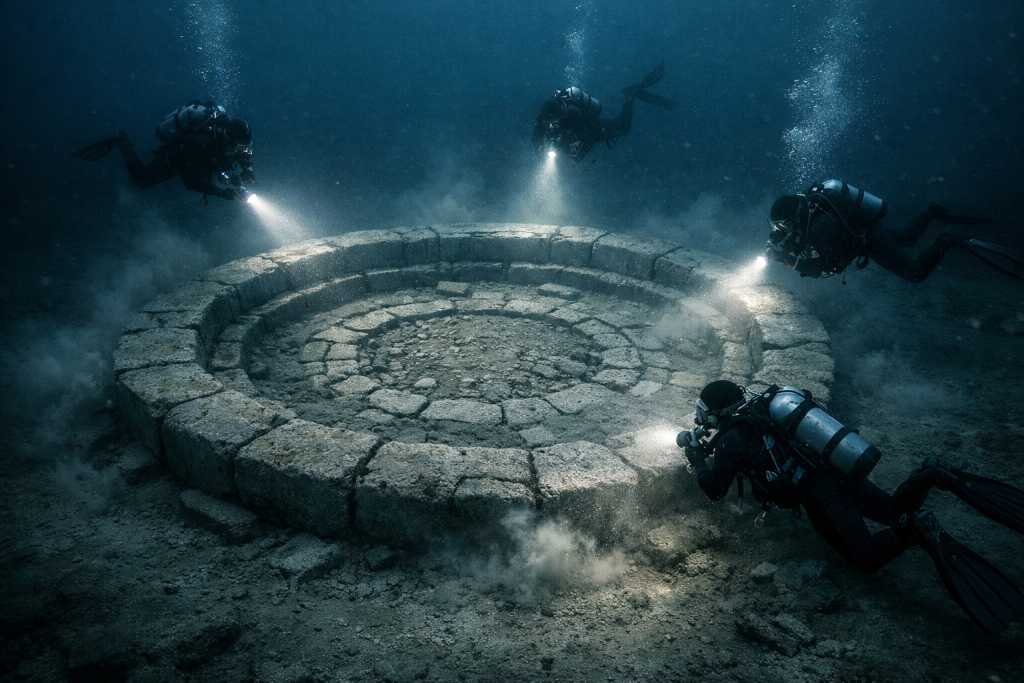
On October 3, 2011, the crew of the Swedish exploration team Ocean X returned to a sonar contact they had first detected months earlier in the northern Baltic Sea. The publication date of this account follows years later; the sonar anomaly was first recorded in June 2011 during a scan for historical shipwrecks between Sweden and Finland.
Coordinates placed the object approximately 90 meters below the surface. The Baltic at that depth is dark and cold, with low salinity and limited current movement. Visibility for divers is typically restricted to a few meters. The seabed in that region consists largely of fine sediment and glacial deposits.
The sonar image displayed a circular formation roughly 60 meters in diameter. A linear track extended behind it across the seafloor, as if the object had moved before stopping. The shape did not resemble a conventional wreck. It appeared symmetrical, with raised features and sharp edges inconsistent with natural rock formations according to the divers’ preliminary statements.
On October 3, divers descended.
They reported limited visibility. The water temperature was near freezing. Artificial lighting illuminated what they described as a circular structure rising several meters above the seabed. Its surface appeared rough, with what one diver later compared to “burn marks” or darkened stone. No visible propellers, hull plating, or identifiable ship components were observed.
Several divers stated that electronic equipment behaved irregularly near the site. Cameras and satellite phones reportedly ceased functioning when positioned directly above the object, resuming operation once moved away. These claims were described in interviews conducted after the expedition. Independent verification of the equipment malfunction was not formally documented in publicly released technical reports.
Divers described straight lines and what appeared to be right angles on parts of the formation. They also noted a staircase-like structure leading upward along one section of the object. Sediment samples were collected and later identified as common geological material, including granite and gneiss typical of glacial deposits in the Baltic region.
No biological activity beyond typical seabed organisms was reported at the immediate surface of the structure. Surrounding marine life was described as sparse. The team did not recover large fragments from the formation.
Subsequent analysis by marine geologists suggested that the object could represent a natural rock formation shaped by glacial processes during the last Ice Age. Ocean X maintained that the sonar image and visual impressions warranted further investigation.
No official maritime authority classified the formation as artificial. No confirmed vessel registry matched its dimensions. The site remains at approximately 90 meters depth in international waters of the Baltic Sea.
The Baltic remains quiet above it. The sonar image persists in archived expedition files. On the recorded date of June 2011, a circular anomaly appeared on a screen aboard a survey vessel. On October 3, 2011, divers descended and documented what they saw in limited light beneath cold water.
The structure remains in place.
Leave a Reply