By Clara Monroe
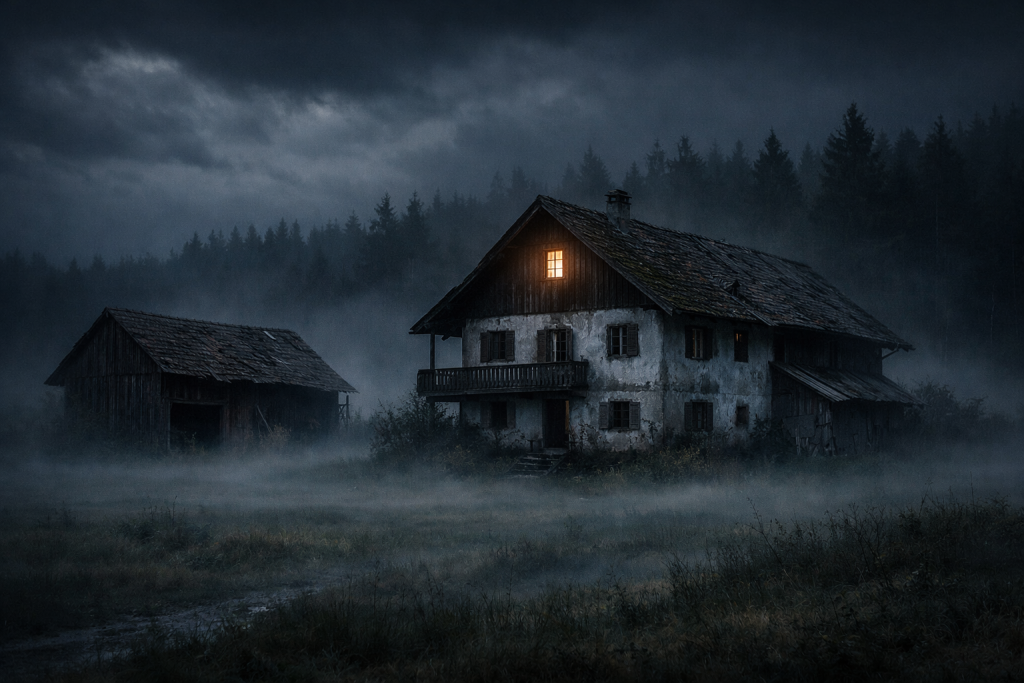
On the evening of March 31, 1922, in the quiet rural fields of Bavaria, Germany, something happened on a small isolated farm that would later grow into one of Europe’s most unsettling rural legends.
The farm was called Hinterkaifeck. It stood alone between the villages of Gröbern and Kaifeck, surrounded by farmland, low trees, and narrow dirt roads. Neighbors could see the roof of the house from afar but the property itself sat deep within its fields, far from regular foot traffic.
The Gruber family lived there.
Andreas Gruber, sixty-three years old, ran the farm with his wife Cäzilia. Their widowed daughter Viktoria lived there as well, raising her young daughter, also named Cäzilia. A new maid had arrived only a few hours before the events began.
What happened next was discovered days later.
On April 4, neighbors noticed something strange. Smoke had been rising from the chimney for several days, but no one from the farm had been seen in town. The mail remained untouched. The animals were still being fed.
Concerned villagers walked to the farm to investigate.
Inside the barn they discovered four bodies.
The remaining two were later found inside the house.
The entire Gruber family had been murdered.
Police arrived shortly after the discovery and began documenting the scene. Their records would later become the foundation of a story that still circulates through Bavarian folklore and European mystery archives.
Several strange details emerged during the investigation.
Neighbors reported hearing footsteps in the attic during the days before the murders. Viktoria had mentioned unusual noises coming from above the ceiling but could not determine the source.
Another neighbor reported seeing footprints in fresh snow leading from the forest toward the farmyard days before the crime. Investigators confirmed the tracks had no corresponding prints leaving the property.
Then there was the maid.
The previous maid had quit only days earlier, claiming the house was haunted. According to statements recorded later, she said she heard footsteps and doors opening during the night when everyone else was asleep.
These claims were not treated as supernatural by the police. Instead, they were recorded as part of the witness testimony surrounding the case.
Investigators also discovered signs that someone had remained on the farm after the murders.
The livestock had been fed.
Food had been eaten.
The chimney continued to produce smoke.
Whoever committed the crime appeared to have stayed there for several days before disappearing.
The case quickly spread through newspapers across Germany. It became one of the most puzzling murder investigations of the early twentieth century.
But the story did not end with the investigation.
Years later, long after the farm buildings had been demolished, travelers and farmers passing through the area reported strange experiences. Some described hearing distant knocking sounds at night. Others claimed they saw lights moving across the empty fields where the farmhouse once stood.
Local residents began referring to the location simply as “the silent farm.”
Throughout the decades the story continued to evolve. Researchers, journalists, and historians revisited the police files repeatedly. Multiple suspects were proposed, but no definitive solution was ever confirmed.
What remains today are the documents.
Police photographs.
Witness testimonies.
And the lingering reputation of the place where the farm once stood.
The fields are quiet now. Crops grow where the house once stood, and only a small memorial cross marks the location.
Yet the story of Hinterkaifeck continues to circulate across Germany and beyond. For many it remains a chilling historical mystery. For others it is simply a tragic case from rural history.
But every version of the story begins the same way.
A remote farmhouse.
Strange footsteps in the attic.
And a silence that lasted too long.
Leave a Reply